One Odd Particle Collision Offers Most Tantalizing Dark Matter Clue Yet
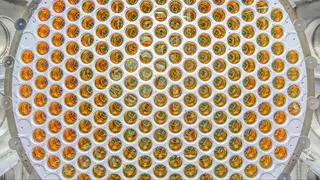
The LUX-ZEPLIN experiment captured a single high-energy collision that researchers have failed to attribute to known radiation or detector artifacts. After decades of fruitless searches, this lone event stands out as the most compelling direct candidate for a dark matter particle, though it remains unconfirmed.
Expanded Detail
EXPANDED:
The LUX-ZEPLIN experiment recorded a solitary high-energy collision that cannot be explained by standard radiation sources or detector malfunctions. Researchers
Expanded detail and Context are AI-generated analysis; the linked article remains the authoritative source.
Related stories
This summary is AI-generated and original to Mobble; the linked article is the authoritative source.
Original headline: “Physicists May Have Just Found the Most Promising Sign of Dark Matter Yet. But It Was Just One Particle.” Browse more stories.