Tesla's rare-earth-free motor unlikely to weaken China's grip on critical minerals
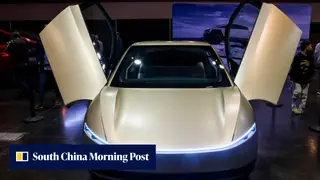
Tesla CEO Elon Musk claims the Cybercab's motor uses no rare earth elements, but analysts say this is unlikely to significantly reduce China's leverage in the rare earth market. The technology faces scaling challenges and rare earths remain essential across many industries. Musk's statement reflects efforts to secure supply chains amid US-China trade tensions.
Tesla's earlier vehicle lineup relied on induction motors that avoided rare earths, but the company switched to permanent-magnet designs for the Model 3 in 2017 to achieve superior performance. The recent Cybercab announcement suggests a potential return to a rare-earth-free approach, though its real-world efficiency remains unverified by independent testing.
Industry observers interpret the statement as a strategic response to geopolitical friction, where advanced semiconductors and rare earths serve as reciprocal bargaining tools. However, the commercial viability of this new motor is questioned, and these minerals continue to be indispensable across numerous sectors beyond automotive propulsion.
If Tesla successfully scales this rare-earth-free motor, it could gradually reduce the EV sector's dependence on permanent magnets, potentially easing supply chain vulnerabilities for Western manufacturers. However, because these minerals remain essential across numerous other industries, China's broader market leverage may persist. Consumers could eventually see changes in vehicle costs or performance, though the immediate societal impact is likely limited to strategic industrial adjustments rather than widespread market shifts. The move could influence future investment decisions in mining and recycling, but scaling hurdles mean significant changes to global mineral flows may take years to materialize.