Four-Hour 'Musk' Doc Turns to Computer-Generated Stand-In for Its Subject
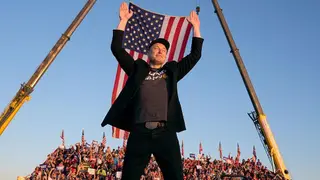
Alex Gibney's nearly four-hour documentary 'Musk' uses a computer-generated avatar to deliver Elon Musk's own words, since the subject declined to participate. The film traces Musk's ascent to wealth and influence, examining how his ambitions were shaped by science fiction and his role in global politics. It premiered at the Venice Film Festival and is scheduled for release on October 16.
The documentary, with a runtime of 3 hours 45 minutes, premiered out of competition at the Venice Film Festival. Gibney's team compiled a comprehensive archive of Musk's public statements to build a digital stand-in, which speaks directly to the camera from a gaming chair, ensuring the subject's own recorded words are used despite his refusal to participate.
The film charts Musk's ascent from his early software venture Zip2, which sold for $22 million without turning an operational profit, to his acquisition of Twitter. It also highlights his South African upbringing under apartheid and his failure to condemn that system, while framing his visionary persona as a carefully constructed illusion.
This film could influence how audiences perceive documentaries about non-participating public figures, potentially setting a new precedent for using synthetic media to hold powerful subjects accountable. By presenting Musk's own words through a computer-generated avatar, it may prompt viewers to question the authenticity of self-mythologizing narratives in the tech world. The approach could also affect how future subjects engage with critical journalism, knowing their recorded statements might be repurposed in unexpected ways.