Stealth startup builds AI agents that handle unseen environments
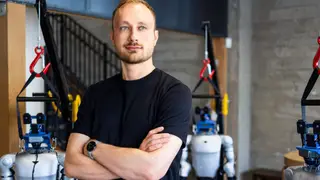
Danijar Hafner, formerly of Google DeepMind, is founding a startup focused on enabling AI agents to navigate unfamiliar situations using model-based reinforcement learning. He develops world models that simulate physical reality, allowing agents to learn and predict outcomes without extensive real-world training. The company is also experimenting with humanoid robots to test these capabilities in physical spaces.
Hafner's startup, currently unnamed and unmarked, occupies a sparse San Francisco office where imported humanoid robots hang from overhead racks. His method, model-based reinforcement learning, uses internal "world models" to simulate physical reality, allowing agents to practice and forecast outcomes before acting in the real world. This contrasts sharply with traditional robotics that relies on extensive physical trial-and-error.
Raised in rural Germany by musician parents, Hafner taught himself coding from a neighbor and took online AI courses during high school. His career includes a 2015 student role at Google Brain and collaborations with AI pioneers like Geoffrey Hinton and Ashish Vaswani. Former colleague Timothy Lillicrap ranks him in the top 0.5% of researchers, noting he often builds complex systems alone. His earlier projects, PlaNet and Dreamer 2, demonstrated planning and human-level game performance.
If Hafner's world-model approach succeeds, it could significantly accelerate the deployment of robots into domestic and commercial settings, as they would require less costly and time-consuming physical training. This may lower barriers for household assistance, elder care, and warehouse automation. However, reliance on simulated environments could introduce unforeseen risks if the models fail to capture real-world complexities. The technology may also reshape the robotics industry, favoring firms with strong simulation capabilities over those with extensive physical data collection.