Wildfire suppression strategies are failing to break the cycle
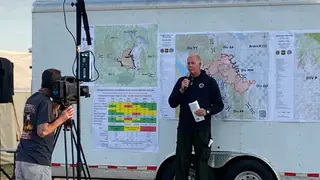
A Forest Service incident commander reflects on repeated firefighting efforts in Northern California, realizing that aggressive suppression merely defers risk. Local officials and the Karuk Tribe proposed allowing a fire to burn under mild conditions to reduce future fuel loads. The article suggests that traditional containment tactics are trapped in a doom loop, unable to address the root causes of megafires.
In August 2023, a cluster of lightning-sparked blazes merged across the Six Rivers National Forest near Orleans, California. Incident commander Dan Dallas arrived to find local officials and the Karuk Tribe advocating for a controlled burn under damp, foggy conditions to clear roughly 50,000 acres of accumulated brush.
That tactical experiment proved short-lived, as prolonged heat and dryness now limit safe burn windows. Federal policy has recently reverted to extinguishing all fires, reversing decades of gradual acceptance of natural burns. Consequently, massive, fast-moving fires increasingly dominate federal firefighting expenditures.
Communities in fire-prone regions could face escalating risks as suppression strategies defer rather than eliminate hazards. Residents, tribal nations, and local agencies may see repeated evacuations and property threats, while firefighting budgets strain under megafire costs. Without broader shifts in land management, the cycle of intense, destructive blazes may persist, disproportionately affecting rural populations and those dependent on forest ecosystems for livelihoods and cultural practices.