GOP's 1970 Health Plan Echoes Today's Medicare for All Debate
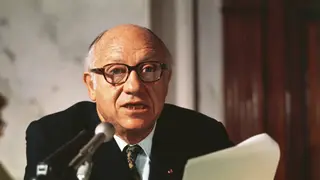
An analysis traces the concept of expanding Medicare to all Americans back to a 1970 proposal by Republican Senator Jacob Javits, contrasting it with the current progressive push. The piece notes that while Medicare for All is now a rallying cry for Democrats in the 2026 midterms, its historical roots lie in a different era of the GOP. It highlights how the idea has evolved from bipartisan support to a polarizing issue, with some Democratic leaders now distancing themselves from it.
The 1970 Javits proposal followed Medicare's 1965 creation, which many backers viewed as a stepping stone to universal coverage. Earlier, President Truman's push for national health insurance failed due to fierce opposition from the American Medical Association, which warned of "socialized medicine" and defended the doctor-patient relationship from government intrusion.
That opposition was bolstered by a political alliance of southern Democrats and Midwestern Republicans. Consequently, liberals in the 1950s pivoted to a targeted approach, concentrating on elderly Americans as a deserving group, which eventually led to Medicare and later Javits's expansion idea.
This historical framing could reshape current debates by challenging the assumption that single-payer healthcare is exclusively a progressive invention. Voters may reconsider the policy's legitimacy when learning of its bipartisan roots, potentially influencing 2026 midterm campaigns. However, modern political polarization could mean this history is used to highlight how far the GOP has shifted, rather than to build consensus. The impact may be felt most among undecided voters and moderate Democrats distancing themselves from the label.