Ancient projectile points in Uzbekistan suggest early advanced weaponry
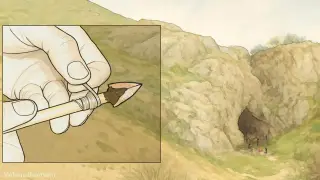
Archaeologists found tiny 80,000-year-old projectile points at Obi-Rakhmat in Uzbekistan, with impact damage resembling arrowheads used by Homo sapiens in France 25,000 years later. This suggests sophisticated projectile technology may have existed in Central Asia before modern humans settled in Europe, potentially revising migration timelines.
The Obi-Rakhmat shelter sits high in the Tien Shan mountains, with excavations spanning a ten-meter sediment layer that records roughly 40,000 years of occupation. Its stone tool assemblage was originally grouped with the Initial Upper Paleolithic, though newer analysis links it to older Levantine traditions.
Researcher Ludovic Slimak previously proposed a Central Asian route for early human dispersal, which this new PLOS One study supports. The site's projectile points show wear patterns matching later French artifacts, suggesting a shared technological lineage that predates European settlement.
This finding could reshape prevailing Eurocentric narratives about human migration, potentially shifting focus toward Central Asia as a key dispersal corridor. Archaeologists and historians may need to revise timelines for when sophisticated weaponry emerged, while the broader public could gain a more nuanced understanding of early human capabilities. The impact remains academic for now, but it may influence future excavation priorities and funding in understudied regions.