New Sensing Technique Tracks Glacier Fractures
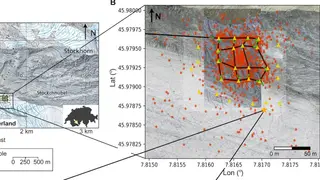
Researchers used fiber optic cables to detect seismic activity from fractures in a Swiss glacier, revealing the process of hydrofracturing where meltwater creates pressure. This technique could serve as an early-warning system for ice instability and help predict sea level rise.
The method employs laser pulses sent through a grid of optical fibers; the timing of light scattered back by vibrations pinpoints the exact location of seismic events. This setup acts as thousands of individual sensors, offering a safer, cheaper alternative to traditional point-based seismometers, as researchers can monitor remotely without traversing dangerous terrain.
Over a single week, the Swiss experiment recorded more than a thousand icequakes, confirming that denser meltwater drives cracks deeper into the ice, weakening its structure. This process is a suspected driver of major ice shelf disintegration in Antarctica and Greenland, and a similar seafloor deployment near a Greenland glacier previously captured rapid ice loss.
This monitoring approach could offer vital early warnings for communities living beneath unstable glaciers, potentially safeguarding infrastructure like railways and villages. By revealing the mechanics of meltwater-driven fracturing, it may also refine predictions of polar ice sheet collapse, helping coastal regions better anticipate and adapt to future sea level rise. Improved forecasting could ultimately inform disaster preparedness and long-term coastal management strategies.