Bronze Age chieftain's grave yields Europe's sole intact folding chair
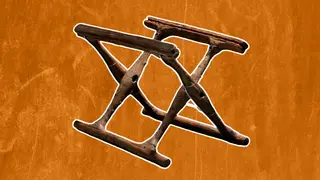
Archaeologists have identified a wooden folding chair from the Bronze Age as the only fully preserved example in Europe. It was found in a chieftain's burial and likely served as a status symbol. The artifact offers rare insight into ancient furniture craftsmanship.
The Guldhøj chair, recovered from a chieftain's burial, belongs to a broader tradition of high-status grave goods. While folding chairs appear in later ancient cultures, this find is exceptional for its complete survival, likely aided by specific burial conditions. Its presence in an elite tomb underscores the role of portable furniture as a marker of authority and mobility. This artifact offers a rare, tangible link to Bronze Age woodworking techniques, allowing researchers to study a functional object that typically decays over millennia.
This find could significantly refine archaeological understanding of Bronze Age social hierarchies and material culture. For scholars, the chair may serve as a benchmark for identifying similar, less-preserved artifacts, potentially reshaping interpretations of elite craftsmanship. Museum curators might use it to create more engaging exhibits on prehistoric daily life. The public could gain a deeper appreciation for the sophistication of ancient woodworking, though the impact remains largely confined to academic and educational spheres.