Roman Space Telescope launch imminent to map dark matter and energy
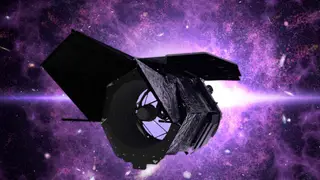
The Nancy Grace Roman Space Telescope is scheduled to launch on August 30 from Cape Canaveral. It will capture images with Hubble-like resolution but cover a sky area 100 times larger, making it 1000 times faster at gathering data. Its primary mission is to map dark matter distribution and measure dark energy's effects over five years.
The telescope's wide-field instrument will capture infrared light with Hubble-level sharpness across a vastly larger footprint, enabling rapid surveys of dark matter's gravitational influence and dark energy's accelerating expansion. A coronagraph instrument will block starlight to reveal exoplanets far fainter than their host stars, laying groundwork for NASA's proposed Habitable Worlds Observatory.
After launch, the observatory travels roughly a month to the L2 Lagrange point, then undergoes calibration before science operations begin near 2027. Its five-year baseline mission covers about 12 percent of the sky, reaching back to when the universe was roughly 2 billion years old. Mission extensions, common for space telescopes, could broaden this coverage considerably.
The telescope's broad surveys could reshape fundamental physics understanding, potentially altering how humanity perceives